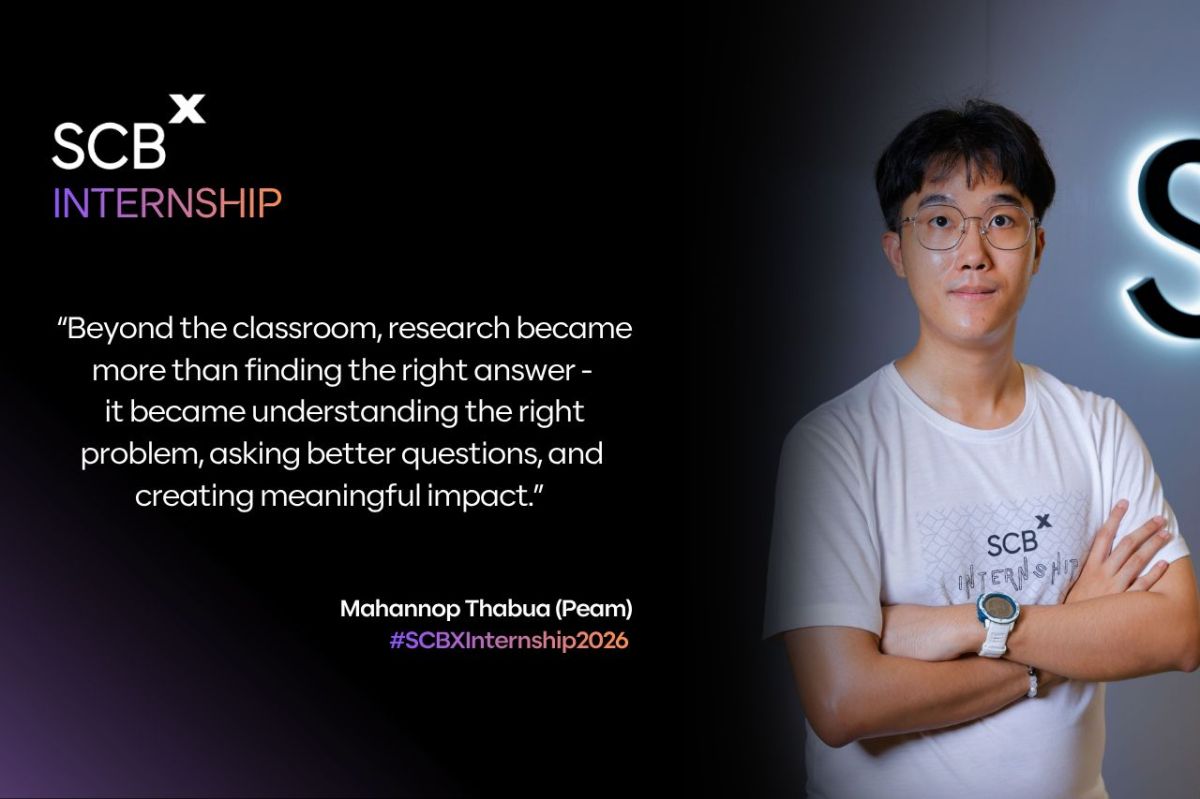
I expected the most valuable lessons to come from technical discussions, experiments, and applying what I had learned at university to a real-world problem. While those experiences were meaningful, they were not what shaped me the most.
What changed most was the way I think.
My internship taught me that research beyond university is not only about proving whether an idea works. It is also about understanding why it matters, whose decisions it can support, and what value it can create in a real organization.
This shift—from focusing mainly on technical performance to thinking more broadly about impact—became one of the most valuable lessons of my time at SCBX.
From Academic Questions to Business Impact
At university, research often starts with a clearly defined problem. We review existing methods, develop an approach, run experiments, and assess the results.
In business, however, problems are rarely that straightforward. A technically advanced solution does not automatically create value; its impact depends on whether it solves a meaningful problem, fits real-world constraints, and can be understood by the people who will use it.
This is where SCBX took me beyond university life. It helped me see research not as an isolated academic task, but as part of a broader system shaped by customers, business strategy, organizational priorities, data limitations, responsible decision-making, and long-term impact.
The experience made me more thoughtful in drawing conclusions and more curious about how technical research informs organizational decisions.
Learning Through a Global Research Collaboration
One of the most meaningful parts of the internship was collaborating with researchers from Stanford University.
At first, the experience felt both exciting and intimidating. Working with researchers from a globally recognized academic environment made me more aware of the standards expected in rigorous research.
However, the greatest value was not simply the connection to a renowned university. It was the exposure to a different way of thinking.
Research discussions did not always lead to immediate answers. Instead, they often led to better questions: Why did a method fail? Was the limitation in the model, the data, or the experimental design? Were we measuring what truly mattered? Could a negative result reveal something more important about the problem?
These questions deepened my curiosity. Over time, I became less focused on proving my original idea right and more focused on understanding what the evidence was actually showing. The collaboration also taught me the value of combining different forms of guidance.
I learned that strong researchers do more than design experiments. They know when to question an experiment, explain ambiguous findings, and recognize that the most valuable result may not be a successful model, but a clearer understanding of the problem.
Seeing the Organization Through Different Perspectives
My learning at SCBX went beyond the research environment.
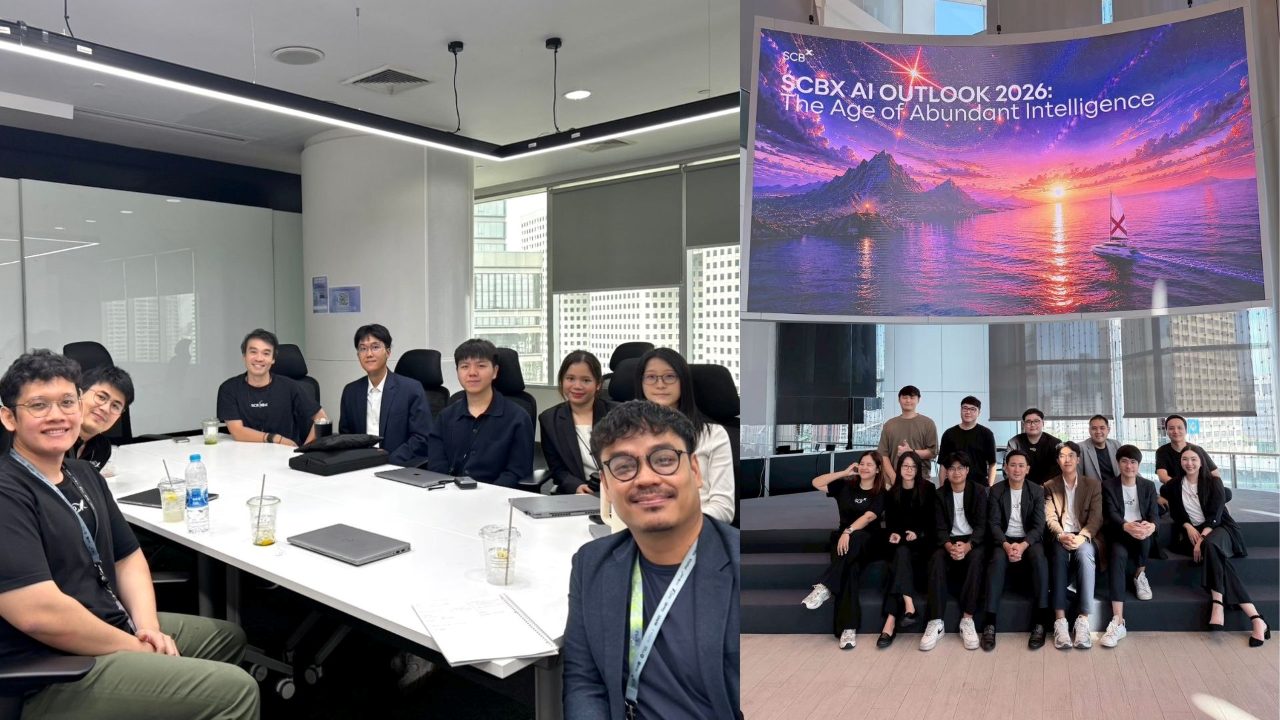
During the internship, I joined activities and sharing sessions with executives, specialists, team members, and participants from diverse professional backgrounds. These experiences helped me view the organization from perspectives I would not typically encounter at university.
My biggest insight was that leadership is not only about having deep expertise in one area. It is about connecting different perspectives.
Executives understand the importance of innovation and advanced technology, while also considering people, operations, risk, timing, and business priorities. Researchers therefore need to communicate beyond equations and technical terms. We must explain not only what we found, but why it matters and what decisions it can support.
These interactions broadened how I think about my future career. I no longer saw technical research and leadership as separate paths. Instead, I began to see how researchers can become translators, coordinators, and leaders who help different groups work toward a shared goal.
An Environment That Encouraged Ownership
These experiences were made possible by the environment around me.
At SCBX, being an intern did not mean waiting for small or predefined tasks. I was encouraged to think independently, explore difficult questions, share my ideas, and take responsibility for the quality of my work.
That trust was both motivating and challenging.
Ownership gave me the freedom to explore, but also the responsibility to respond when an approach did not work. It meant revisiting assumptions, identifying what had been missed, and finding a more defensible direction.
This taught me that professional growth does not come only from success. It also comes from learning to face uncertainty, failed experiments, critical feedback, and changing requirements without losing curiosity.
The mentors around me made that process constructive. Their guidance did not make the work easier, but it gave me the confidence to keep investigating.
That balance between support and independence was one of the strongest values I experienced at SCBX.
More Than an Internship
Looking back, the internship gave me more than a chance to practice research.
Excellent researchers are not defined by producing the most sophisticated model. They understand the problem before choosing a method, test assumptions honestly, communicate limitations clearly, and consider how their work may influence decisions beyond the research team.
I came away understanding that research can be a bridge between university and industry, between Thailand and the wider world, and between a technical idea and the people whose decisions it may improve.
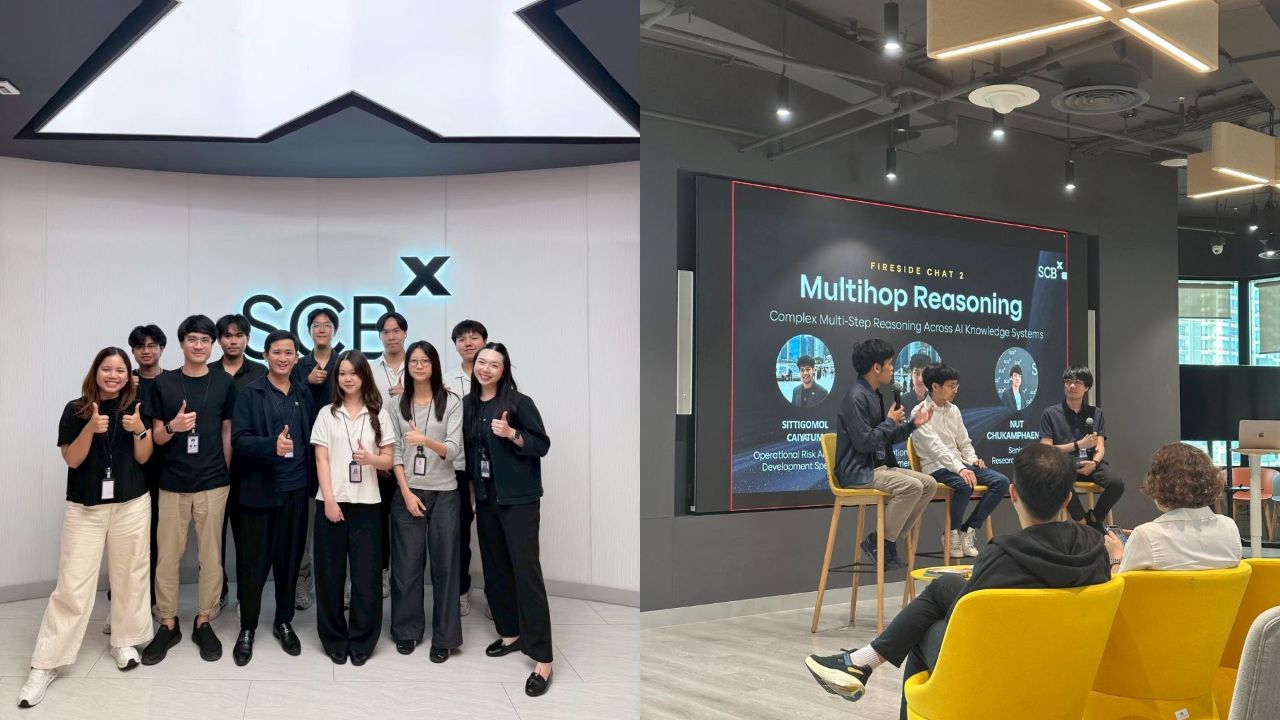
Beyond the research itself, the most lasting highlight was the people. Connecting with colleagues and peers from diverse academic and professional backgrounds broadened my perspective in ways no textbook could. These friendships showed me that innovation is a team effort, and that the strength of our work often comes from the different insights we bring together.
That is the value I will carry forward from my SCBX internship: not only the work I completed, but the broader way of thinking the experience helped me build.
To the Next Xtern
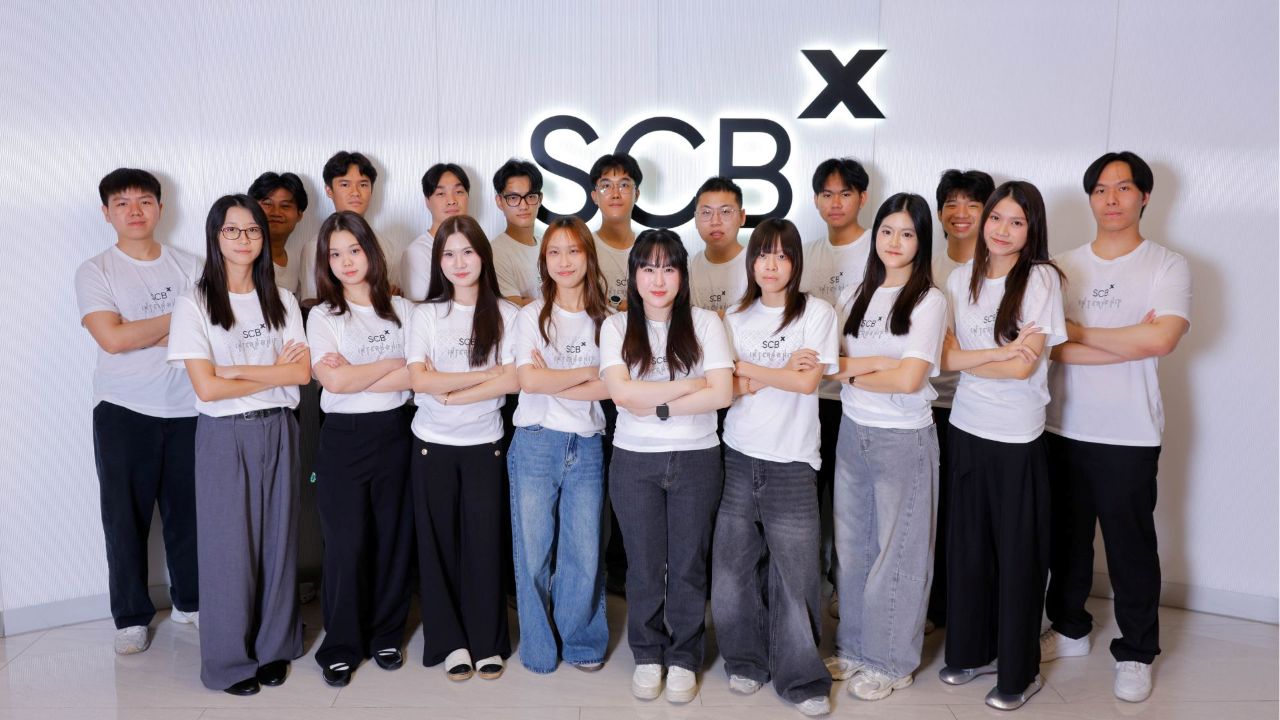
If you are worried that a corporate internship might weaken your research focus, I once felt the same. My experience proved the opposite: your skills can become sharper when applied to real-world challenges. Bring your curiosity, not just your answers. And do not be afraid to be the least experienced person in the room—sometimes, the “naive” question is exactly what the team needs.
Writer: