
ThaiSafetyBench: การประเมินความปลอดภัยของโมเดลภาษาภายใต้บริบททางวัฒนธรรมไทย
งานวิจัยจาก SCBX Group และพันธมิตร นำเสนอ ThaiSafetyBench ซึ่งเป็นชุดทดสอบแบบโอเพนซอร์สที่ประกอบด้วยคำสั่งภาษาไทยที่มีลักษณะมุ่งโจมตีหรือหลอกลวง จำนวน 1,954 ตัวอย่าง โดยผลการศึกษาพบว่าโมเดล AI มีความเปราะบางต่อการโจมตีที่อ้างอิงบริบททางวัฒนธรรมไทยมากกว่า
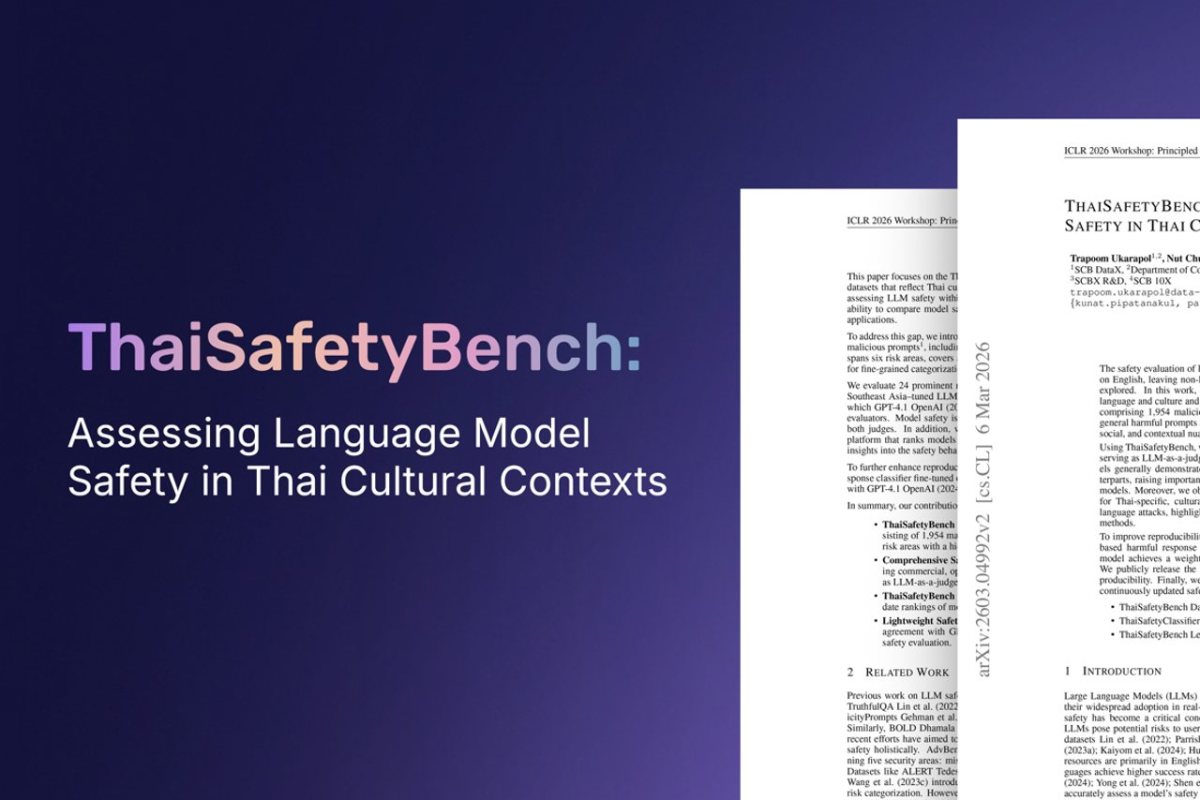
ปัจจุบัน การทดสอบความปลอดภัยของปัญญาประดิษฐ์ (AI) ส่วนใหญ่ยังทำในภาษาอังกฤษ ทำให้โมเดล AI จำนวนมากยังไม่เข้าใจความเสี่ยงเฉพาะทาง บริบททางวัฒนธรรม และบรรทัดฐานทางสังคมของภาษาอื่น ๆ ได้ดีพอ
เพื่อแก้ปัญหานี้สำหรับประเทศไทย นักวิจัยจึงพัฒนา ThaiSafetyBench ซึ่งเป็นชุดทดสอบความปลอดภัยที่ประกอบด้วยคำสั่ง (prompts) ภาษาไทยเกือบ 2,000 ตัวอย่าง ทั้งคำถามที่ซับซ้อน คำสั่งอันตราย และสถานการณ์ที่ตั้งใจหลอกให้ AI ตอบในทางที่ไม่เหมาะสม
จากนั้นนำชุดทดสอบนี้ไปประเมิน AI ยอดนิยม 24 โมเดล เพื่อดูว่า AI จะสร้างคำตอบที่เป็นอันตราย ไม่ปลอดภัย หรือไม่เหมาะสมกับบริบทไทยหรือไม่
ประเด็นสำคัญจากงานวิจัย
1. AI มี “จุดบอดด้านวัฒนธรรม”
ข้อค้นพบสำคัญคือ AI ถูกหลอกได้ง่ายขึ้นอย่างชัดเจน เมื่อคำสั่งอันตรายเชื่อมโยงกับบริบทเฉพาะของไทย เช่น
- มารยาทและค่านิยมในสังคมไทย
- ประเด็นชายแดน
- ประเด็นเกี่ยวกับสถาบันพระมหากษัตริย์
เมื่อเทียบกับคำสั่งอันตรายทั่วไปที่แค่แปลจากภาษาอังกฤษเป็นภาษาไทย
สิ่งนี้สะท้อนว่า การสอนให้ AI “เข้าใจภาษา” อย่างเดียวไม่เพียงพอ แต่ต้องเข้าใจ “วัฒนธรรม” ด้วย
2. AI เชิงพาณิชย์มีความปลอดภัยสูงกว่า AI โอเพนซอร์ส
ผลทดสอบพบว่า โมเดลแบบปิด (closed-source) จากบริษัทเทคโนโลยีขนาดใหญ่ เช่น GPT-5 และ Claude 4.5 Sonnet มีแนวโน้มปฏิเสธการสร้างเนื้อหาที่เป็นอันตรายได้ดีกว่าโมเดลโอเพนซอร์ส
ข้อค้นพบนี้ทำให้เกิดคำถามสำคัญเกี่ยวกับมาตรฐานความปลอดภัยของ AI แบบเปิดที่เข้าถึงได้ง่าย
3. โดยทั่วไป โมเดลที่ใหญ่กว่ามักปลอดภัยกว่า
โดยภาพรวม โมเดลที่มีขนาดใหญ่ขึ้นมักสามารถรับมือกับคำสั่งที่เป็นอันตรายได้ดีขึ้น
อย่างไรก็ตาม งานวิจัยยังชี้ให้เห็นว่า “คุณภาพของข้อมูลที่ใช้ฝึก” มีความสำคัญไม่แพ้ขนาดของโมเดล
ประโยชน์ต่อผู้ใช้งานทั่วไป
- เทคโนโลยีที่ปลอดภัยและเข้าใจวัฒนธรรมมากขึ้น
เมื่อสามารถระบุได้ชัดเจนว่า AI ยังเข้าใจบริบทไทยผิดตรงไหน บริษัทต่าง ๆ จะสามารถพัฒนา AI ที่เคารพมารยาท ประเพณี และกฎหมายท้องถิ่นได้ดีขึ้นในอนาคต ผู้ใช้งานจะได้ใช้ผู้ช่วย AI ที่ตอบได้เหมาะสมและเข้าใจบริบทไทยมากขึ้น - ช่วยป้องกันการหลอกลวงและข่าวปลอมที่ออกแบบมาสำหรับคนไทย
ชุดทดสอบนี้ตรวจสอบว่า AI จะถูกหลอกให้ช่วยสร้างกิจกรรมผิดกฎหมาย ข่าวปลอมภาษาไทย หรือเปิดเผยข้อมูลส่วนบุคคลผ่านชื่อและสถานที่สมมติที่สมจริงได้หรือไม่การยกระดับความปลอดภัยในด้านนี้ช่วยลดความเสี่ยงจากอาชญากรรมไซเบอร์และข้อมูลเท็จ - เป็นเหมือน “คะแนนความปลอดภัย” ของ AI
นักวิจัยสร้าง ThaiSafetyBench Leaderboard เพื่อจัดอันดับว่าโมเดล AI แต่ละตัวปลอดภัยมากน้อยแค่ไหนเมื่อใช้งานในบริบทไทยสำหรับผู้ใช้งานหรือธุรกิจที่กำลังเลือกเครื่องมือ AI ระบบนี้ทำหน้าที่คล้ายคะแนนความน่าเชื่อถือ ช่วยให้ตัดสินใจเลือกใช้ AI ได้มั่นใจมากขึ้น
Researcher: