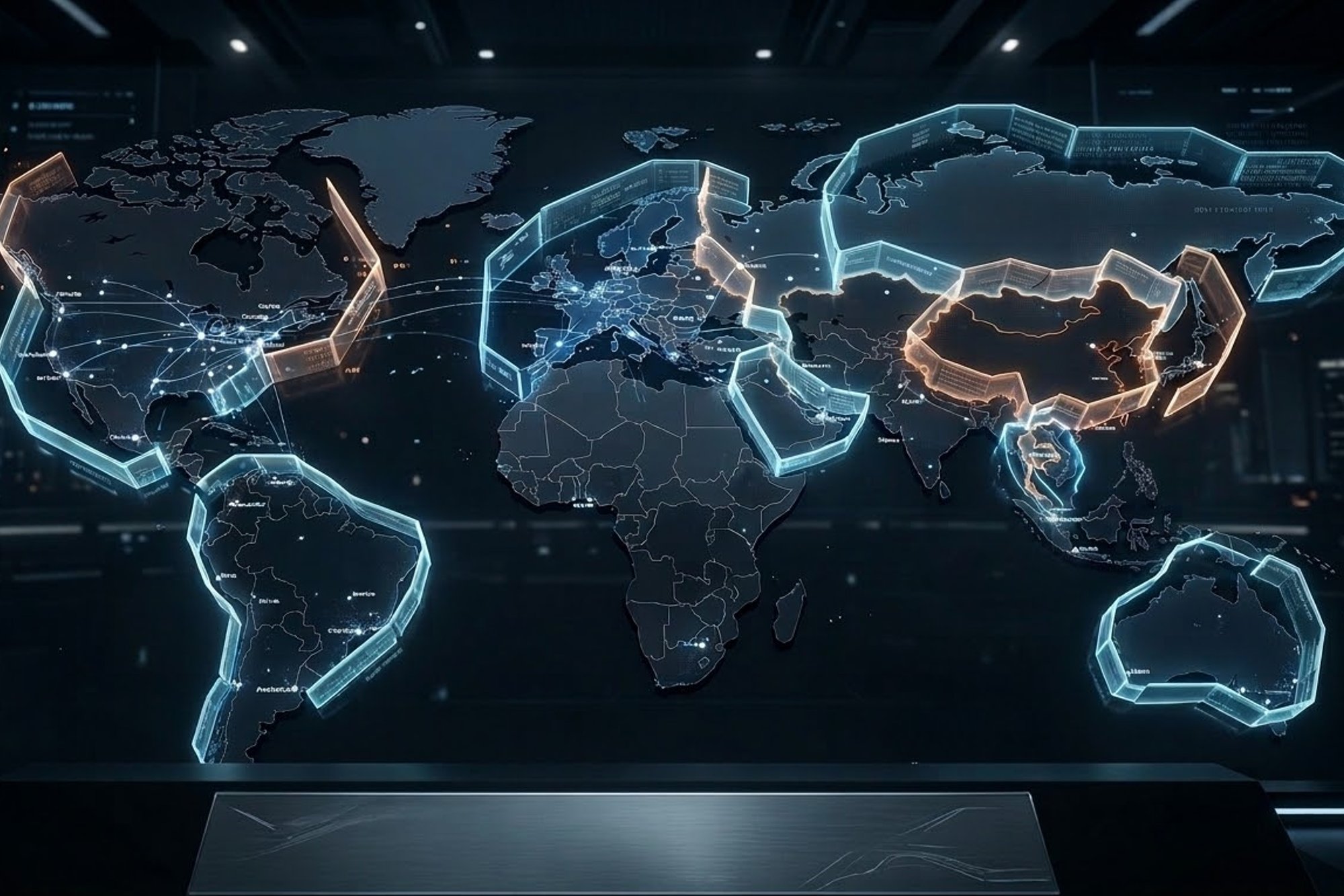

It starts like any ordinary morning. You wake up, reach for your phone, and open your banking app. It doesn’t load. You refresh. Still nothing. Messages begin to flood in. “Is your bank working?” “Why can’t I transfer money?” News alerts start appearing. “Global encryption systems compromised.” “Major institutions investigating quantum related security breach.”
Most people do not understand the technical language. They understand one thing. Their money might not be safe.
That day has a name. Q Day. The day a quantum computer becomes powerful enough to break the encryption that protects today’s digital world.
It sounds dramatic, almost cinematic. But the race toward quantum technology is real. Around the world, research labs and technology companies are investing billions into building machines that can solve problems no classical computer can handle. Quantum technology is not just a faster version of today’s computers. It is a fundamentally different way of computing.
If today’s computers are like someone walking through a maze, quantum computers are like gas filling the maze. A classical computer explores one path at a time, hitting dead ends and backtracking until it eventually finds the exit. A quantum computer, by contrast, spreads across every possible path simultaneously, allowing the correct route to emerge almost instantly. The difference is not just speed. It is scale. And that shift in scale is what makes quantum technology so powerful and, in some areas, disruptive.
Today’s computers think in bits. A bit is either 0 or 1. Everything you see online, from your bank balance to your private messages, ultimately runs on combinations of these zeros and ones. Quantum computers use something called qubits. A qubit can represent 0, 1, or both at the same time. This allows quantum machines to explore many possible answers simultaneously rather than one by one.
For everyday tasks like sending emails or browsing social media, this difference may not matter much. But for the type of math that keeps our passwords and bank accounts secure, the impact is enormous. Today’s encryption works because it is easy to lock information with a very large secret number, but incredibly hard to guess that number from the outside. Even the most powerful computers today would need millions of years to break it. A sufficiently powerful quantum computer could potentially do the same job in hours.
Encryption is the invisible lock of the digital economy. It protects your banking transactions, credit card payments, private conversations, and even national infrastructure. The digital world was built on the assumption that certain mathematical problems are practically impossible to solve. Quantum computing challenges that assumption.
Some experts believe Q Day is still years away. Others warn that the threat has already begun in a quieter form. There is a concept called “harvest now, decrypt later,” where encrypted data is stolen today and stored, waiting for the day quantum machines become powerful enough to unlock it. In other words, preparation cannot begin on Q Day. It must begin long before.
The good news is that the world is not standing still. Governments across the U.S., Europe, and Asia have begun migration planning for quantum resistant encryption. Major technology companies such as IBM and Google are actively researching quantum safe security, while financial institutions worldwide are running internal assessments to understand their exposure. But transitioning global financial infrastructure is not like updating a phone app. Financial systems are deeply interconnected, often built over decades. Replacing cryptographic standards across banking networks and payment systems requires careful coordination, long term planning, and rigorous testing before any change can safely go live.
At SCBX, we take this development seriously. Financial safety and security are not optional features. They are foundational responsibilities. As quantum technology advances, our defenses must evolve in parallel. That means closely monitoring global progress, investing in security innovation, stress testing our systems, and preparing for post quantum standards before they become urgent necessities.
Now imagine Q Day again.
You wake up. You open your banking app. It works. Transfers go through. Payments process normally. The headlines still announce a breakthrough in quantum computing. But there is no panic. Markets remain stable. Transactions continue. Life goes on.
The difference is not luck. It is preparation.
Q Day does not have to be the day the world pauses. It can be the day we realize that foresight mattered.
In a quantum world, history will remember not the day the code was broken, but the day the world did not.
Writer: