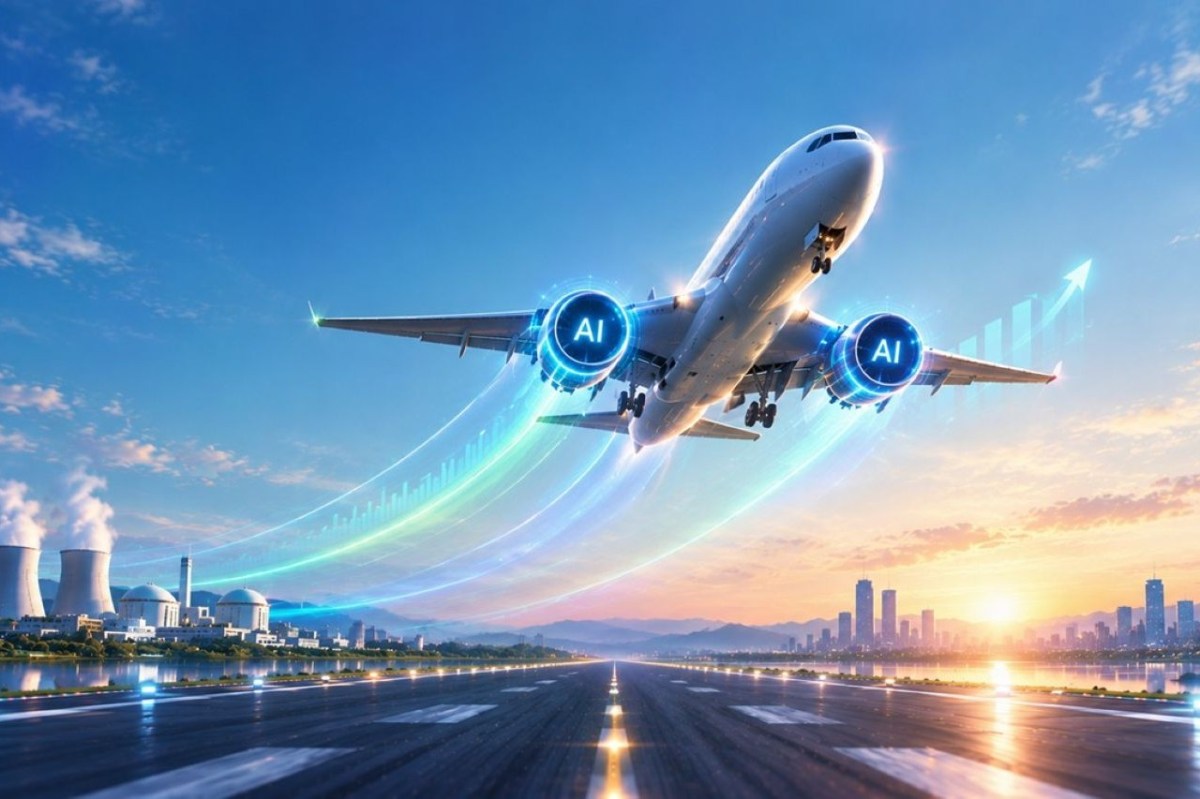
Imagine the economy as an aircraft preparing for take-off. It has just been fitted with a new engine, one that many believe could bring change on the scale of electricity or the internet. That engine is AI.
The new engine lets the aircraft fly further and faster, but it also makes it bigger and heavier.
The pilot pushes the throttle to full power. The aircraft starts to roll, faster and faster.
But the end of the runway is also drawing closer with every second.
So the question is not whether the engine is powerful enough, but whether the runway is long enough. If the runway is too short, no matter how good the engine is, the aircraft will simply run out of road.
And for the AI economy, that runway is energy.
Behind AI are data centers, buildings full of computers that never stop running. The more we use AI, the more electricity we need. The problem is that most of our electricity still comes from coal and natural gas, which release greenhouse gases that accelerate global warming, while many countries, including Thailand, have committed to cutting these emissions in the long run.
So the big question is, how do we build a runway long enough without harming the planet?
Solar and wind may be the first answers that come to mind, but they have a key limitation. Their output depends on the weather. When there is no sun, little wind, or long stretches of cloud and rain, they produce less power. Data centers, on the other hand, need a stable supply of electricity around the clock. This is why nuclear energy is back in the conversation.
What exactly is nuclear energy?
Consider something as simple as boiling water in your kitchen. Most power plants work in a similar way. They use heat to turn water into steam, and the steam spins a turbine to generate electricity. The difference lies in where the heat comes from.
A fossil fuel plant is like a wood fire. You have to keep adding fuel, and every time it burns, it gives off smoke. Nuclear power is more like having a small “heat stone” that gives off energy continuously without burning anything, so it releases almost no greenhouse gases. And a tiny amount of fuel can last for years.
Although many people still have concerns about safety and the large investment involved, the technology has come a long way.
Traditional nuclear plants rely on water pumps and backup power to keep cool. If those systems fail, the situation becomes hard to control. Newer designs can cool themselves using natural forces, even if outside power is cut.
As for investment, conventional nuclear plants require substantial capital, and some take more than a decade to build.
This is where the SMR (Small Modular Reactor), a smaller type of nuclear power plant, comes in.
SMR components are built in a factory before being assembled on site, which means lower upfront costs, faster construction, and the option to add capacity later. Their smaller size also makes safety easier to manage. These advantages have led tech giants such as Meta and Amazon to start investing in SMRs to power their own data centers.
In Thailand, the first SMR unit is targeted to begin operating in 2037. The real test is whether regulation, talent and public trust can be ready in time.
Nuclear may not be the only answer, but it fills an important gap that solar and wind cannot, a steady supply of clean electricity.
So what does this have to do with the financial sector?
Large energy projects require heavy investment and take a long time to pay back, which calls for new approaches to financing and risk assessment.
At the same time, countries with a ready runway are better placed to attract investment and make it “land” there.
For SCBX, keeping track of energy trends matters, as the energy decisions made today will shape how industries grow, where investment flows, and what new risks emerge in the future.
If Thailand’s economy is the aircraft, AI is its engine. Clean, reliable and sufficient energy is the runway that will determine how far the aircraft can ascend. This is the key reason why nuclear energy may well prove to be one of the answers for the future.
Original Post: https://techsauce.co/tech-and-biz/scbx-nuclear-energy-runway-thai-economy-ai-era
Writer: